

Family of Woodstock Hotline: Addressing the Loneliness Epidemic through Unbiased Listening
Despite living in an era of unprecedented digital connectivity, the United States is currently facing a “loneliness epidemic” that threatens the fundamental fabric of public health. In 2023, the U.S. Surgeon General issued a landmark study revealing that more than 50% of Americans experience measurable levels of loneliness.
This crisis had been brewing long before the COVID-19 pandemic, which only served to exacerbate existing feelings of isolation. And it is not getting better.
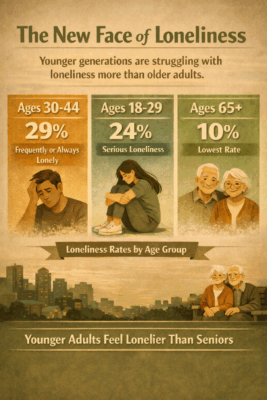
A landmark 2024 national survey by the Harvard University Graduate School of Education highlights a startling demographic shift: loneliness is no longer a condition primarily associated with the elderly. In fact, younger generations are suffering at higher rates:
Furthermore, socioeconomic factors play a critical role; individuals with lower incomes are significantly more likely to experience persistent loneliness compared to those with higher incomes.
The Health Impact: A Silent Killer
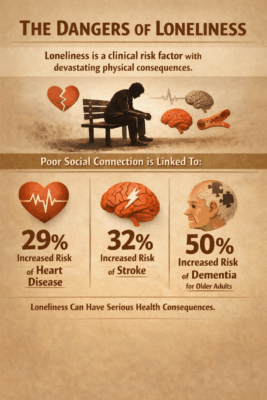
Mental health is equally compromised. The Harvard study noted that 57% of respondents who were frequently lonely cited the inability to “share their true selves” as a primary cause. This indicates that loneliness is often less about being alone and more about a lack of authentic, safe spaces for self-expression.
The Family of Woodstock Model: Unbiased Listening
Since 1970, Family of Woodstock has operated an Emergency Hotline at (845) 679-2485. While the hotline serves as a gateway to critical services — including domestic violence counseling for 1,491 survivors and housing aid for 482 individuals in 2023 — the underlying driver for most of the 65,000-plus annual contacts is a desperate need for human connection.
The effectiveness of this intervention lies in its commitment to “unbiased listening.” As Executive Director Michael Berg explains, “At that first point of contact, it’s really important that we remember the foundational values that Family of Woodstock was built upon. First, we don’t judge people for what they’ve done or are thinking about doing. Second, we don’t tell them what to do. Following those two principles helps us establish a level of trust with the client, and they feel more at ease telling us what’s really going on for them. It’s listening without bias.”
This approach allows callers to strip away the social masks they wear in their daily lives. “They just need the ear of someone they can talk with,” notes Alan Rovitzky, assistant program director. “They want a break from their life where they have to act like everything’s OK. They just want someone to hear them.”
Challenging the Digital Facade

While technology is often marketed as a solution to isolation, 73% of survey respondents in the Harvard study identified technology as a primary contributor to loneliness. Social media frequently creates a “false sense of connection” that prioritizes screen time over in-person interaction.
Family of Woodstock counters this by fostering a “culture of connection” that is rooted in the local community. “There are a lot of people in our clients’ lives who ‘remind’ them that they aren’t what they should be or what they think they ought to be,” says Patterson Schackner, hotline volunteer. “So, when they call us, we don’t do that. We listen and help guide, but never judge them.”
Trust Is the Key Component for Helping
The loneliness epidemic requires more than just clinical intervention; it requires the restoration of community trust. Organizations such as Family of Woodstock demonstrate that 24/7 accessibility and non-judgmental support are vital lifelines. By providing a space where individuals can be their “true selves,” we can mitigate the severe physical and mental health risks associated with isolation.
“Our clients rely on us to be here whenever they need us…and we are,” notes Mimosa “Mo” Gordon, hotline intern. “They know we are part of this community and that we care about their issues.”
To combat this epidemic, we must prioritize funding and awareness for community-based listening services that treat human connection as a fundamental right, rather than a luxury. You can learn more about our hotline operation here: Family of Woodstock Emergency Hotline and Walk-In Center

