
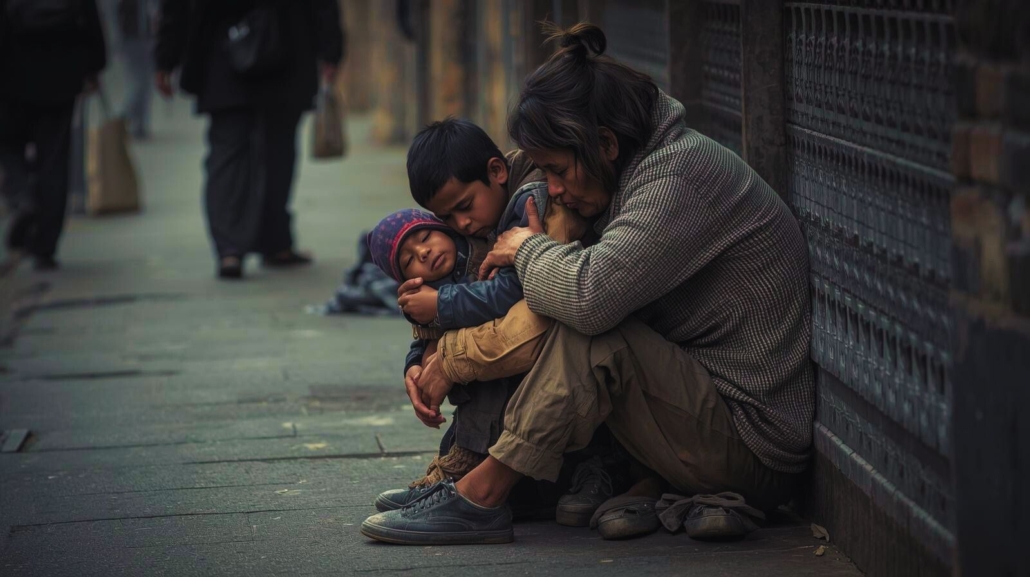
Crisis at the Table: Addressing Food Insecurity
Food insecurity — the lack of consistent access to enough food for an active, healthy life — remains one of the most pressing public health and economic challenges in the United States. Despite the nation’s status as a global agricultural leader, millions of American households continue to struggle with “hunger in plain sight.” As of 2026, the convergence of expiring pandemic-era safety nets, persistent inflation in staple goods, and systemic inequities has created a volatile environment for vulnerable populations.
Food insecurity is not a failure of supply, but a failure of distribution and economic policy, requiring a shift from emergency “band-aid” solutions to sustainable, community-driven systemic change.
In Ulster County, a coalition of non-profits has created a model that addresses the fundamental challenges of food insecurity and ensures healthy food reaches those in need.
A Big Problem in the U.S. The Current Statistical Landscape
First, it is important to note that food insecurity is a huge problem. Recent data from the U.S. Department of Agriculture (USDA) and research organizations such as the Urban Institute paint a sobering picture of the national landscape:
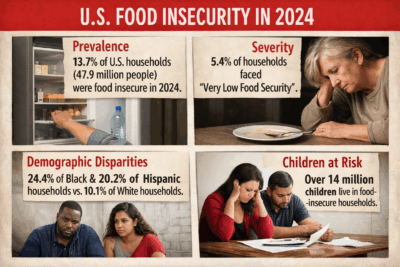
Key Issues Facing U.S. Households
The “hunger gap” in America is driven by three primary structural issues:
The “Heat or Eat” Dilemma: For many low-income households, food is a “flexible” budget item, whereas rent, utilities, and medicine are “fixed.” When the cost of housing or energy spikes, families often compensate by purchasing cheaper, calorie-dense but nutrient-poor foods, or by skipping meals entirely. This creates a cycle of chronic disease, as poor nutrition leads to higher rates of diabetes and hypertension, which in turn increases medical costs, according to research from YadEzra.org.
The Cliff Effect and Policy Erosion: Many families experience the “benefits cliff,” where a small increase in wages leads to a total loss of SNAP (Supplemental Nutrition Assistance Program) benefits, leaving the household worse off than before. Furthermore, the 2025/2026 fiscal periods have seen significant debates regarding SNAP funding and the implementation of stricter work requirements, which often alienate the most vulnerable — such as those with undiagnosed disabilities or those in “childcare deserts.”
Food Deserts and Swamps: Physical access remains a barrier. Rural communities face “food deserts” where the nearest grocery store is miles away, while urban areas often grapple with “food swamps” — an abundance of fast food and convenience stores with no fresh produce. In these environments, even if a family has the funds, the logistical “cost” (transportation time and expense) makes healthy eating nearly impossible, according to research from Long Island Cares.
How Communities Can Address the Issue
While federal policy provides the foundation, community-led interventions are the most effective at closing the “last mile” of food access. This includes medical integration, such as “Food as Medicine” programs where physicians write “prescriptions” for fresh produce, which are covered by insurance or community health grants. Some communities are using institutional support models where schools offer “universal school meals” that eliminate the stigma of poverty and ensure every child is ready to learn regardless of home income.
Other models focus on retail innovation, such as mobile grocery markets and co-ops that bring fresh produce directly to underserved neighborhoods, bypassing the need for expensive infrastructure. Many cities have created urban farms and CSAs that connect local growers with low-income consumers.
Ulster County’s Farm to Food Pantry Collaborative
In Ulster County, the Farm to Food Pantry Collaborative has taken on food insecurity via a multi-agency partnership between Family of Woodstock, UlsterCorps, the Rondout Valley Growers Association (RVGA), the Hudson Valley Farm Hub, and the Bruderhof Community. Led by Family’s Patrick Merrill and UlsterCorps Beth McLendon Albright, the program leverages a robust volunteer network to harvest leftover crops directly from local farms.
The infrastructure utilizes a “Hub Model,” which is a decentralized network of five food hubs (Kingston, Ellenville, Rosendale, New Paltz, and Woodstock) equipped with cold storage. This reduces transit costs and spoilage while supporting four to five local pantries per hub. The program also offers education, addressing the root causes through a Community Resource Guide and multilingual nutrition education including simple recipes in English/Spanish developed with Julia Turshen.
2025 Impact & Accomplishments
The Collaborative demonstrated significant logistical success and volunteer mobilization over the past year:
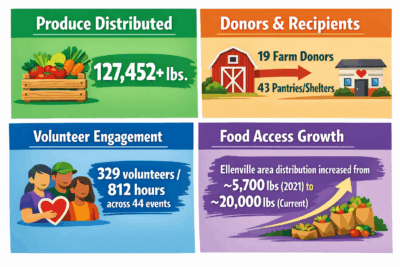
Ulster County Food Collaborative 2025 Accomplishments
There were also facility improvements, including operationalizing a fifth food hub and installing an industrial walk-in freezer/cooler at the Darmstadt Shelter for Single Adults and the Everette Hodge Center, which prepares food for most of Kingston’s after-school programs, to maximize meal utilization.
Broader Agency Food Security Initiatives
The Farm to Food Pantry Collaborative is part of a larger ecosystem of food security services that include:
Regional Recovery: The Ellenville program recovered 20,951 lbs of food from Walmart (Feeding America program) for southern county distribution.
Youth Nutrition: The Hodge Center served 17,550 meals through the Summer Food Service Program and autumn extensions.
Emergency Housing Support: Walk-in centers and shelters provided 90,070 meals to nearly 12,000 individuals in a single year.
The success of the initiative is due to the collaborations between the non-profits as well as “creating a more proactive atmosphere in the region’s food system,” explained Merrill.
“UlsterCorps works seamlessly with Family of Woodstock in providing volunteer resources to maximize our fresh food gleaning operations,” Merrill explained. “We had 329 volunteers who provided a generous 812 hours of harvesting. They worked to gather anything from mustard greens to blueberries. RVGA has been generous in providing needed resources, such as the Silverado we use to transport food from a variety of resources. While the FarmHub has expanded its delivery operations, we remain an integral piece of their distribution model, moving, at times, over 3,000 lbs of produce in a week.”
Merrill noted that the best evidence of the program’s proactive nature was in the response to the federal SNAP cuts this past Fall. “While we were stretched in our capacity, our ability to pivot and accept donations from new sources to meet the needs of the moment was encouraging — in spite of the circumstances,” he said.
Merrill acknowledged that the program has quite a way to go in creating a truly sustainable and closed-loop food system in Ulster County. “Recently, local government has put funding towards ‘food sovereignty,’ buying from smaller farms and redistributing this food to local pantries,” he said, adding that the program is hopeful this continues and expands “to even smaller operations to open the door further to a more decentralized model, which is key to sustainability.”
McLendon Albright and Peter Naddeo, who works in Family’s food security program, said the success of the program is based on empathy and active listening with the community “day in and day out.” They attend ancillary meetings and forge connections, assess needs so organizations can then help one another. Focusing on local is also an important aspect of the program.
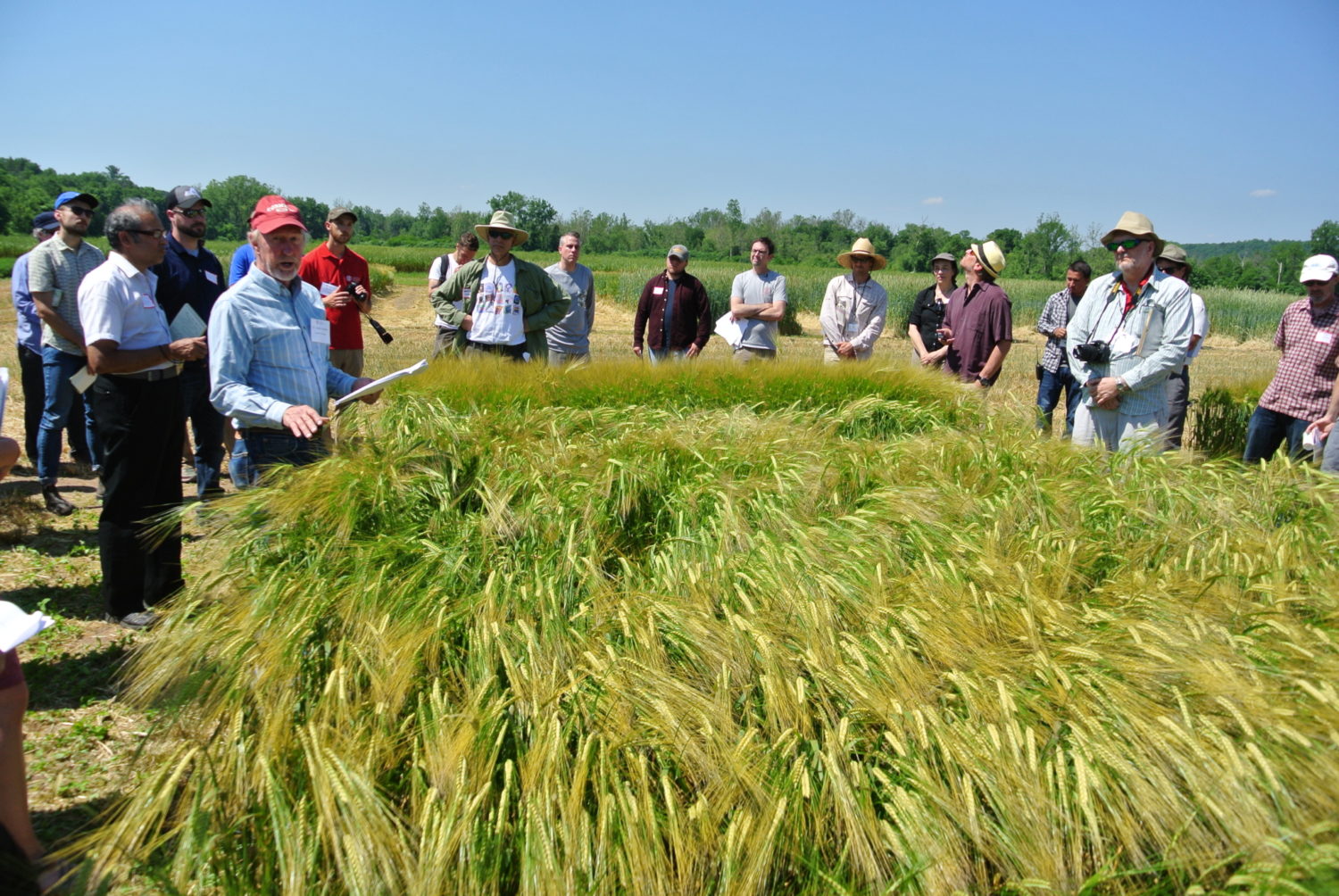
Volunteers Gleaning in Ulster County, NY
“Keeping things local increases the quality of food we can give to people and reduces waste because, at the very least it doesn’t have to travel all the way to Latham [New York] and back,” McLendon Albright said. “Everyone involved hopefully gains a stronger sense of their relationship to the labor that goes into food production as well as the needs of the community they live in.”
When asked about the growing rate of those impacted by food insecurity, McLendon Albright said increasing storage capacity to provide more food is a priority. “When growers have a lot of volume to offer, we have places that we can reliably store it,” she said. “The fact that many pantries are able to access the coolers means that we can serve more programs in a week without driving to every single one, but it also allows the pantries to have more agency in deciding when to access the food with regard to their own needs and schedules.”
Naddeo and McLendon Albright said that having coolers stationed in various quadrants of the county also reduces the amount of travel that any particular pantry might otherwise have to make. “In some cases, the pantries themselves might have an abundance of perishable products that they want to share, and can use the coolers as another outlet to reduce waste and hopefully facilitate relationships between feeding programs,” McLendon Albright said.
The Path Forward: Policy Recommendations
From a policy perspective, elected officials need to strengthen SNAP and WIC. Congress must resist efforts to block-grant nutrition programs, which would reduce their ability to respond to economic downturns. Benefits should be calculated based on the Low-Cost Food Plan rather than the Thrifty Food Plan to better reflect actual market prices.
Across the state and country, communities should be empowered to grow and distribute their own food. This involves zoning changes to allow urban agriculture and tax incentives for grocery stores to open in “under-stored” neighborhoods. Addressing the root cause is also key. Food insecurity is a symptom of poverty. Strengthening the Earned Income Tax Credit (EITC) and increasing the minimum wage to a “living wage” are the most direct ways to ensure families can afford their own groceries.
Conclusion
Food insecurity in the United States is a solvable crisis. It requires a transition from a charity-based model — relying on food banks that distribute surplus — to a rights-based model that ensures every citizen has the physical and economic means to access nutritious food. By combining robust federal safety nets with innovative community-level distribution, such as the Farm to Food Pantry Collaborative, New York and the U.S. can move toward a future where “hunger” is a historical footnote rather than a daily reality for millions.

